Base
Almond
Finely ground for a melting texture.


The emblematic speciality of Aix is the calisson: ground almonds and candied melon on wafer paper, topped with royal icing.
The Aix area is also known for protected-origin olive oil and winter black truffle.
Tapenade, fougasse or daube are Provençal rather than strictly from Aix. Find local produce at the old-town markets, then sit down at Complices, Place des Cardeurs, 7/7.
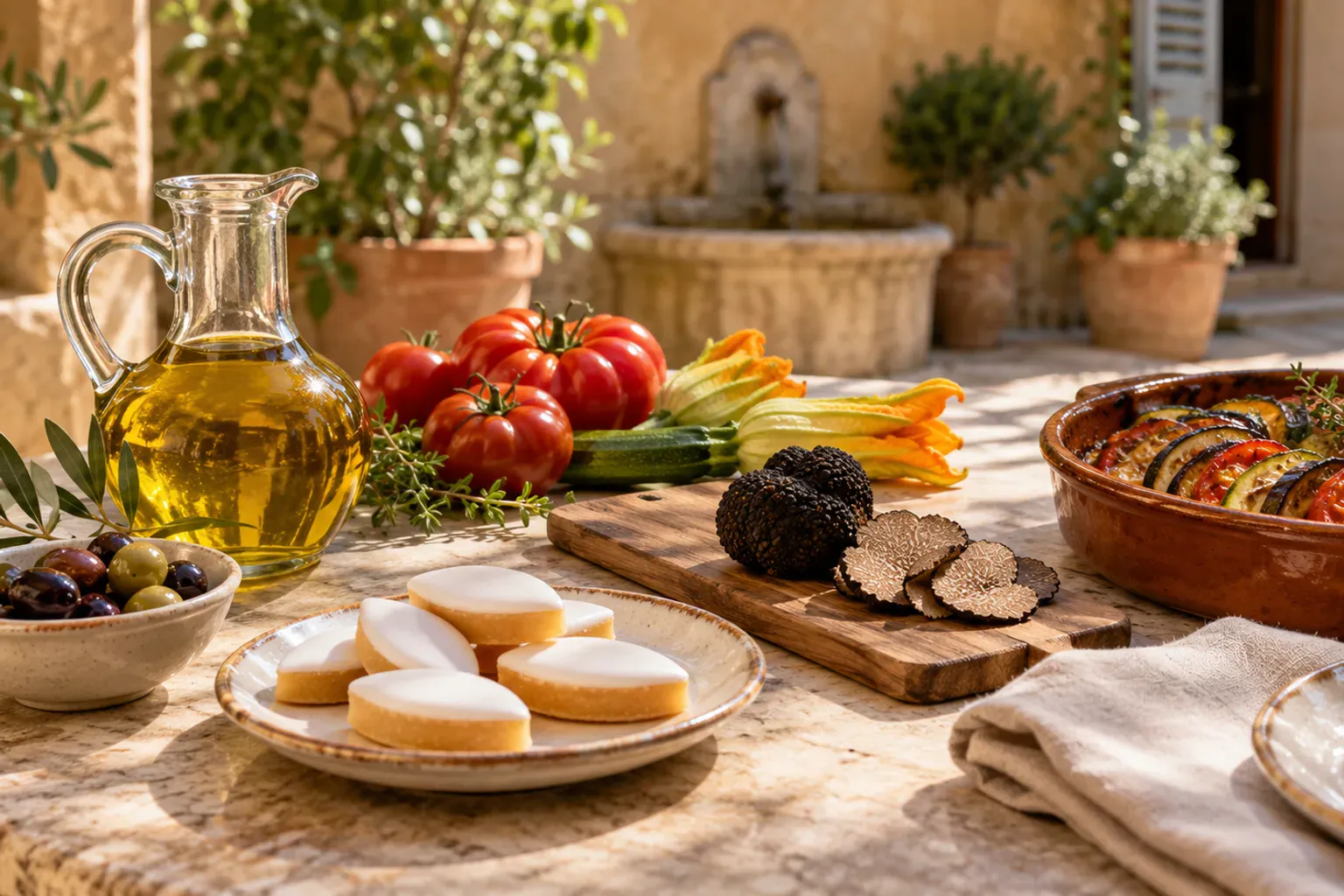
Pays d'AixA town of confectioners, olive oil and markets.
Bouillabaisse belongs to Marseille, socca to Nice. Aix has a quieter food identity: the calisson, olive oil and markets.
Many dishes eaten in Aix are Provençal rather than local; this guide separates fact from legend.
A slim, pearly-white lozenge, the calisson is inseparable from Aix and its confectioners.
A popular legend links it to King René's wedding in the 15th century; other theories point to Italy. What is established is that Aix made it its own, and a blessing of calissons is still linked to a 17th-century plague vow.
Four elements in careful balance.
A good calisson is supple, fruity without hiding the almond, with a clean glaze.
Visit an old-town confectioner, compare and taste one before buying a box. Keep them away from heat.
Around the calisson, a family of sweets — most of them Provençal in the broad sense.
Small, very crunchy round biscuits, traditionally associated with Aix.
A Provençal craft, especially associated with Apt.
An olive-oil brioche, one of the thirteen Christmas desserts.
If it bears the name of Aix or has long been made here, call it Aixois; otherwise, Provençal.
Aix has no savoury dish of its own like bouillabaisse; it belongs to Provençal cooking.
Olive tapenade, anchovy anchoïade, flat fougasse bread, summer stuffed vegetables and winter beef daube: shared across Provence, enjoyed in Aix.
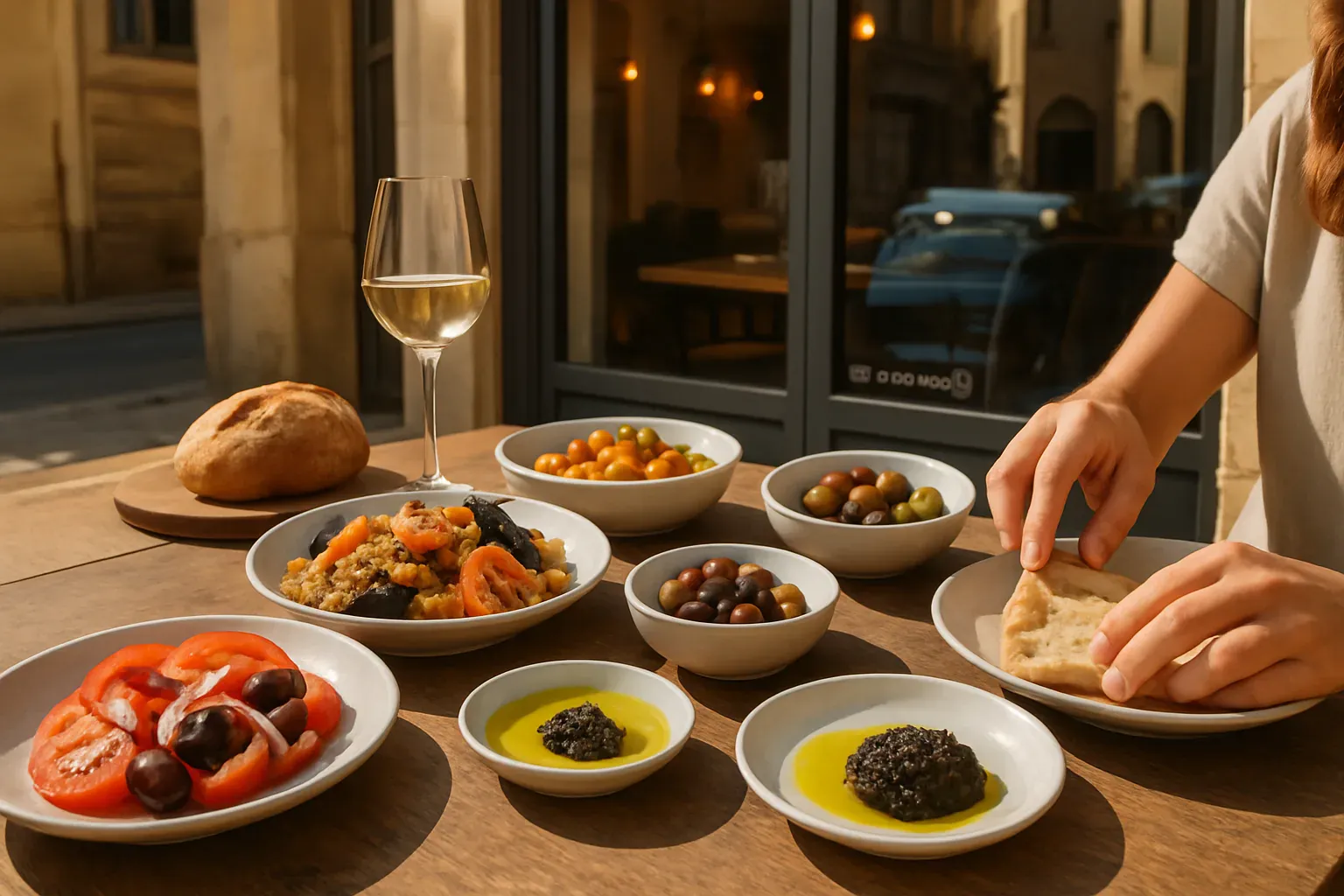
The Provençal repertoireDishes shared across Provence, gladly tasted in Aix.
To understand what flavours them, read our article on herbes de Provence in the kitchen.
The Aix olive oil has a protected designation, with local varieties such as aglandau, salonenque and cayanne.
Black truffle is a winter affair in Provence; buy it fresh, in season.

A daily food market on Place Richelme, and a large market on Tuesdays, Thursdays and Saturdays. Ask producers where things come from.
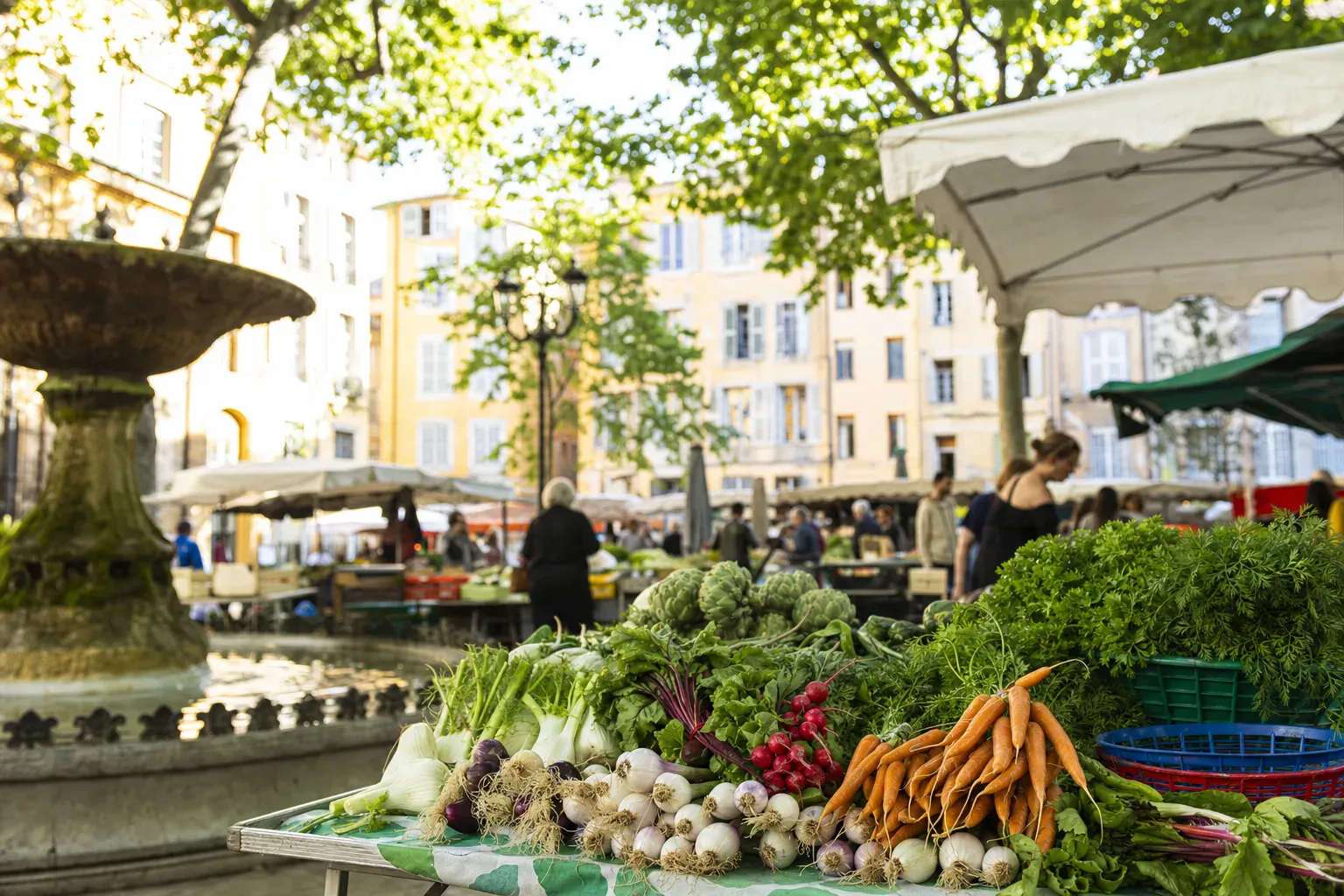
Olives, local oils, tapenades, goat cheese, honey, candied fruit and winter truffles.
Calendar and practical tips in our guide to market days in Aix-en-Provence.

Aixois means from Aix, Provençal means from the region, Mediterranean draws on all cuisines around the sea. Protected origins like the Aix olive oil or Coteaux d'Aix-en-Provence wines tell you precisely where they come from.
Go further with our article on the difference between Provençal and Mediterranean cooking.
Complices is a contemporary Mediterranean table at 30 Place des Cardeurs — fully homemade, with a short seasonal menu.
Our signatures — Coquillettes de notre enfance, Soleil des Cardeurs, Galinette de Méditerranée, Cookie indécent — are ours, not traditional Aix specialities. Open 7/7, lunch and dinner.

See our menu, our restaurant in Aix-en-Provence or our good addresses in old Aix.
The calisson: almond and candied melon on wafer paper, topped with royal icing.
Its origins are debated (King René legend, Italian theories); Aix clearly made it its speciality.
Calissons, Aix olive oil, biscotins, candied fruit, tapenade or herbes de Provence.
Provençal dishes: tapenade, fougasse, stuffed vegetables, daube; truffle in winter.
At the old-town markets, confectioners, delicatessens and mills of the Aix area.
Aixois is specific to Aix (calisson, Aix olive oil); Provençal is shared by the whole region.
After the food walk, take a seat on Place des Cardeurs, 7/7, lunch and dinner.